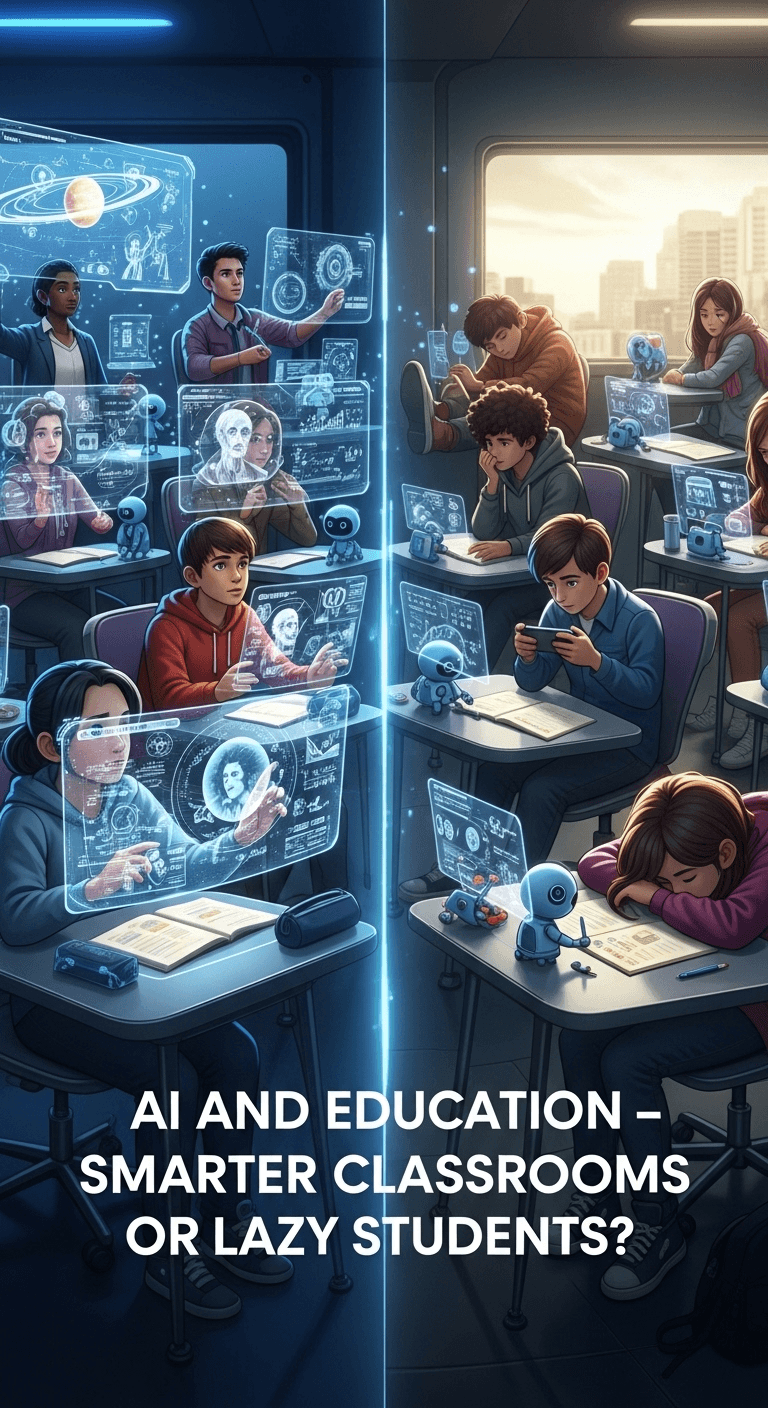
AI is showing up in classrooms, turning boring lectures into personalized lessons and giving students instant tutoring help. But here’s the twist: while some kids get smarter faster, others just get lazier with AI doing the heavy lifting. The future of education may depend on whether we use AI as a super teacher—or just another shortcut.
Introduction
Remember cramming for exams with stacks of notes and energy drinks? Today’s students can just ask an AI tutor, “Explain this like I’m 10,” and boom—instant clarity. Sounds amazing, right? But there’s a catch: if AI makes learning too easy, are we raising smarter kids… or lazier ones?
How AI Is Making Classrooms Smarter
- Personalized learning: AI tracks each student’s strengths and weaknesses, then adapts lessons.
- Instant tutoring: Stuck on math at midnight? AI explains step by step.
- Admin automation: Teachers spend less time grading, more time teaching.
- Language learning: Chatbots chatting in French or Spanish to help students practice.
For teachers and students, it feels like education got a rocket boost.
Why Students Love It
- No embarrassment: Ask “dumb” questions without fear of judgment.
- Anytime learning: School doesn’t close at 3 PM anymore.
- Custom pace: Speed up or slow down depending on the student.
- More engaging: Gamified quizzes and interactive AI lessons keep boredom at bay.
AI can make even history class feel less like a nap.
The Lazy Student Problem
Here’s the downside:
- AI homework cheaters: Why write essays when ChatGPT does it?
- Shallow learning: Students might know the answers but not understand the concepts.
- Overdependence: Relying on AI instead of building problem-solving grit.
- Loss of creativity: AI may spoon-feed, but it doesn’t replace imagination.
It’s like giving kids a calculator before they learn how to count—helpful, but dangerous if used too early.
Real-Life Examples
- Duolingo: Millions learn languages with AI-driven personalization.
- Khan Academy’s AI tutor: Helping students one-on-one in real classrooms.
- AI proctoring tools: Catching cheaters during online exams.
- Essay generators: Loved by students, hated by teachers.
Schools are already in the middle of an AI tug-of-war.
The Future of Education With AI
- AI teachers as assistants, not replacements: Real teachers focus on creativity and empathy.
- Global classrooms: Kids in remote villages learning from AI tutors in their language.
- Life-long learning: Adults reskilling quickly with AI courses.
- Hybrid models: Human teachers + AI systems = smarter classrooms, motivated students.
Bottom Line
AI in education is like giving students a jetpack. Some will use it to fly higher than ever, others to skip the climb entirely. The difference? How teachers, parents, and students choose to use it. AI won’t decide if kids get smarter or lazier—we will.