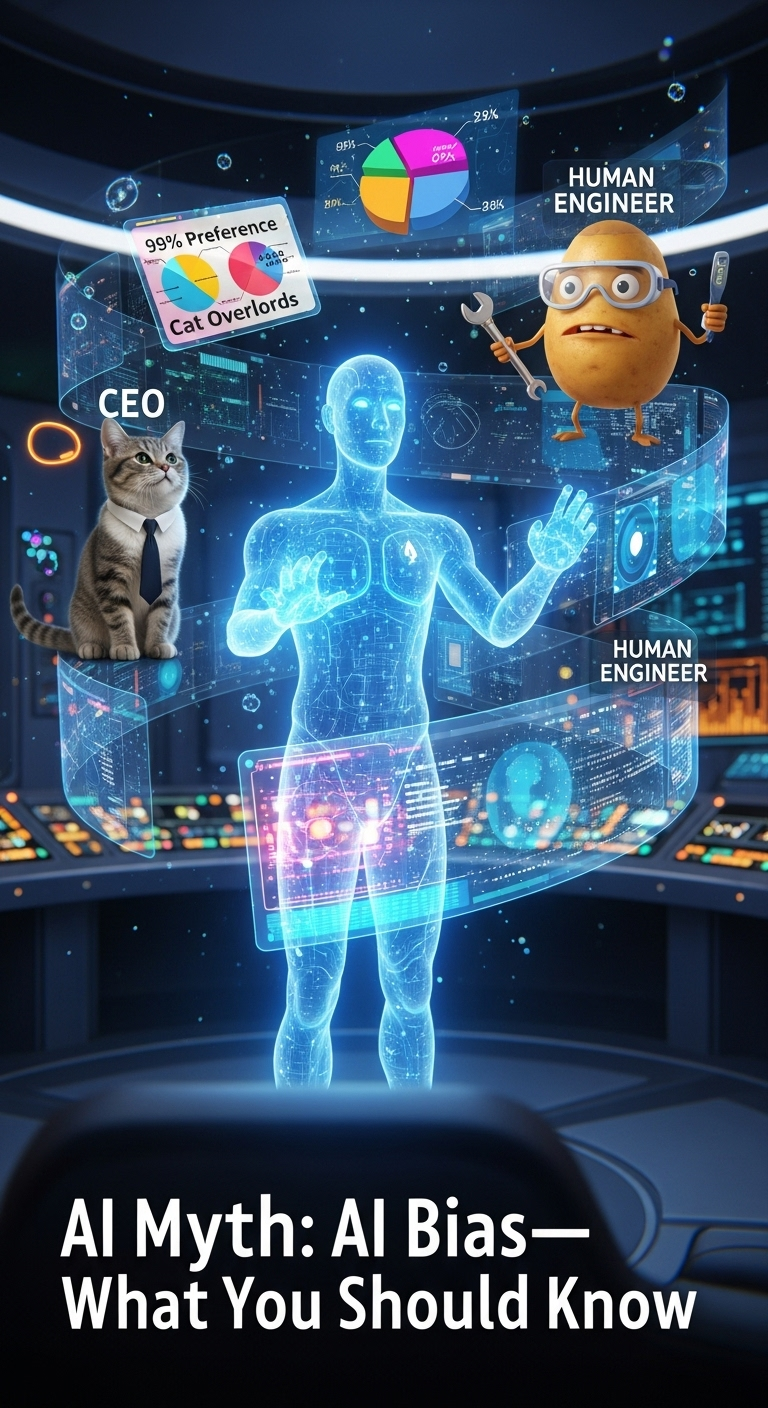
AI is often portrayed as objective, impartial, and infallible. The myth? That machines are free of bias. The reality? AI can inherit human prejudices, amplify them, or even invent some completely unexpected ones. And while this might sound scary, it’s also strangely fascinating—and yes, occasionally hilarious.
Consider an AI trained to recognize faces. In one experiment, it confidently labeled a cat as a “CEO” and a potato as a “human engineer.” Absurd? Absolutely. But this highlights a serious point: AI only knows what it’s taught, and if the data is flawed, the AI’s conclusions can be bizarre, unfair, or unpredictable.
Or take AI hiring algorithms. A system designed to screen resumes might prefer candidates based on patterns in historical data. If the data is biased, the AI will echo those biases—like favoring applicants who play Star Wars trivia or have a fondness for rainbow tacos. Dramatic exaggeration? Maybe. But you get the point: AI bias can be as unpredictable as it is powerful.
Understanding AI bias isn’t about fear—it’s about curiosity and critical thinking. By exploring these quirks, we can design smarter, fairer systems. And along the way, we get a front-row seat to some of the most bizarre, funny, and enlightening AI decisions ever made.
So, AI bias isn’t just a myth—it’s a feature of machine learning, a reflection of human culture, and a source of endless fascination. If nothing else, it reminds us that even machines aren’t immune to the wonderfully weird complexity of humans.