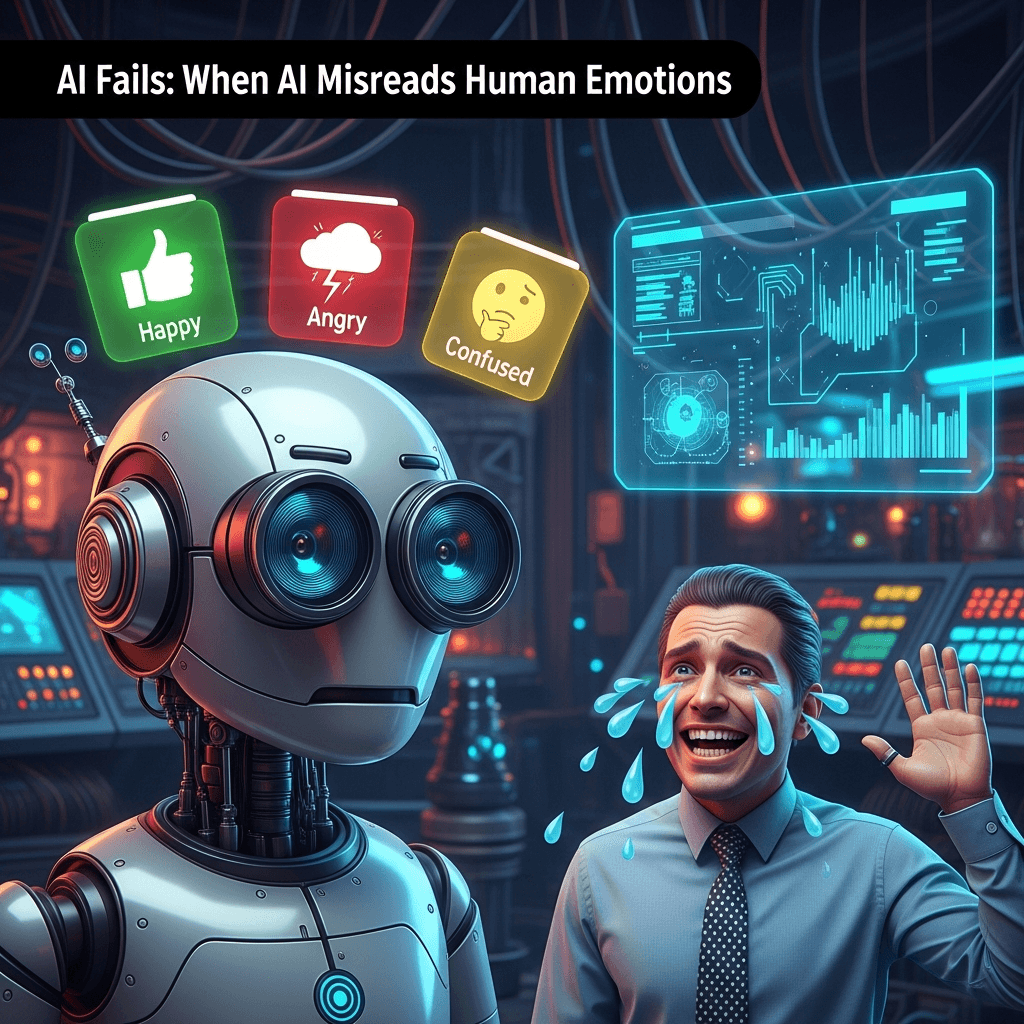
AI can detect faces, track expressions, and even analyze voice tones — but understanding feelings? That’s a whole different story. And when it fails, the results are both hilarious and bizarre.
Take one AI-powered mood detector. A person smiled nervously during a presentation, and the AI confidently declared, “You are extremely happy and ready to party.” Another model misinterpreted tears of joy as “severe distress,” sending a virtual alert to concerned friends. In a way, it’s like having a well-meaning but clueless robot roommate analyzing your every move.
Even chatbots stumble when trying to respond empathetically. Someone types, “I’m sad my cat ran away,” and the AI replies, “Cheer up! You can download a virtual cat instead.” Helpful? Technically. Heartfelt? Not so much.
The charm lies in these mistakes. Each misread emotion shows the complexity of human feelings — the little nuances that no algorithm can perfectly capture. And honestly, laughing at a robot misinterpreting our drama is oddly comforting. It reminds us that emotions are messy, unpredictable, and sometimes, the funniest things in life.