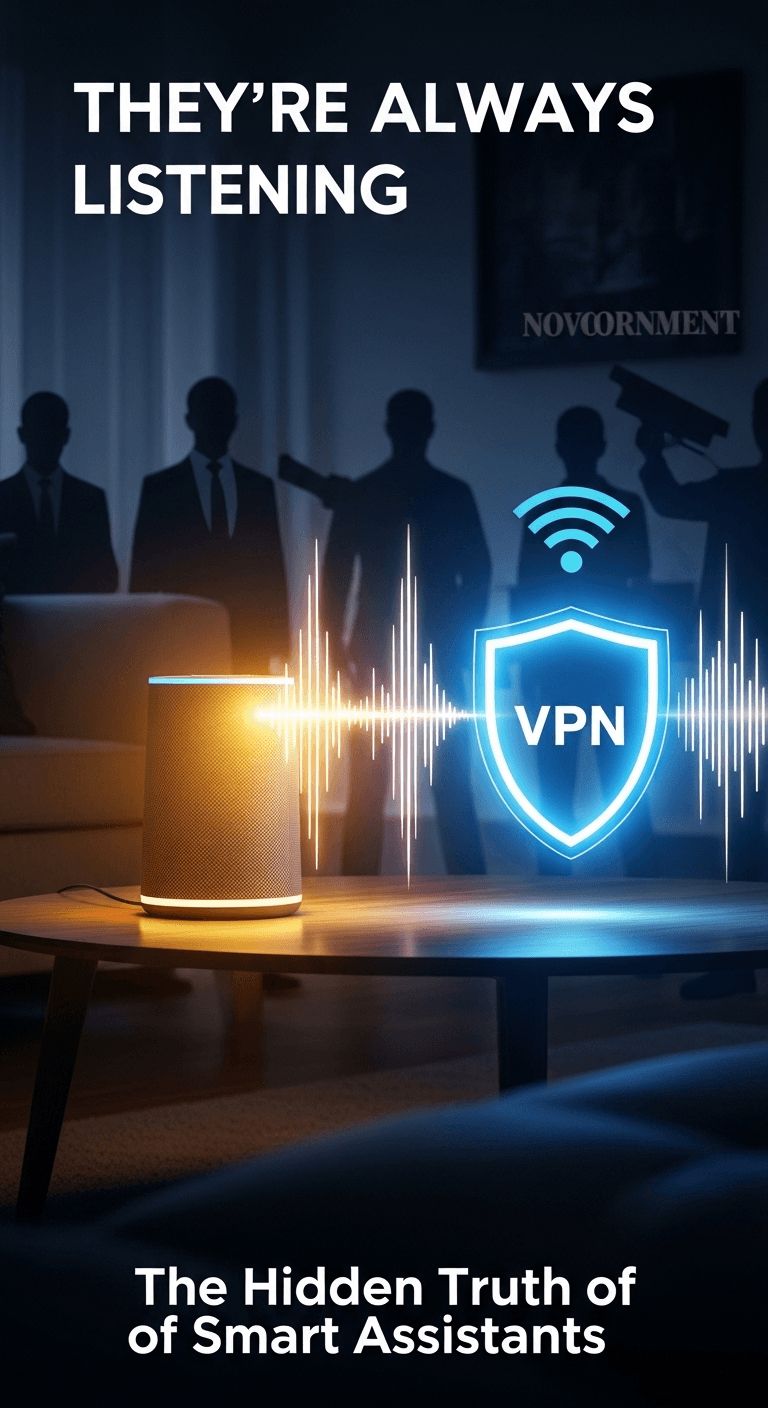
Smart assistants promise convenience—hands-free help, music on command, instant answers. But the hidden truth? Alexa, Siri, and Google Assistant are always listening, always learning, and always feeding data into corporate servers. Here’s what they don’t tell you about your smart assistant—and how to take back your privacy.
The Hidden Truth About Smart Assistants: How Alexa and Siri Are Always Listening
“Alexa, what’s the weather?”
“Siri, set a reminder for tomorrow.”
Smart assistants feel like futuristic magic. But the more you use them, the more they know about you. And here’s the shocking part: even when you’re not speaking to them, they may still be listening.
How Smart Assistants Work
Devices like Amazon Alexa, Apple Siri, and Google Assistant rely on always-on microphones to detect “wake words.” That means they’re constantly monitoring ambient sound, waiting for activation.
What happens next:
- Your command is recorded and sent to company servers.
- Audio is analyzed by algorithms—and sometimes humans—for accuracy.
- Metadata (time, location, device, user profile) is logged alongside the request.
Convenience comes with surveillance built in.
What They Collect
Smart assistants don’t just hear your commands. They gather:
- Voice recordings (including accidental activations).
- Household patterns, like when you’re home or away.
- Contacts, schedules, and reminders.
- Device interactions, from smart TVs to door locks.
- Shopping preferences, especially on Alexa-enabled devices.
Piece by piece, they build a living portrait of your private life.
Who Gets Your Data
- Tech companies (Amazon, Apple, Google) use data for AI training and product development.
- Advertisers tailor ads based on voice data and shopping patterns.
- Third-party developers may access snippets via integrated apps.
- Governments can subpoena or demand access to recordings.
Your living room is no longer a private space—it’s part of the data economy.
Real-World Incidents
- Amazon admitted that Alexa conversations are reviewed by employees to improve AI.
- Google faced backlash when contractors leaked recordings of private conversations.
- Court cases have used Alexa data as evidence, proving recordings can be stored and accessed.
These aren’t hypotheticals—they’ve already happened.
The Myth of “Accidental Activations”
Smart assistants often activate unintentionally, mistaking similar words for “Alexa” or “Hey Siri.” Each false trigger means extra data recorded and uploaded.
You may never realize your device has been listening.
Why Antivirus Doesn’t Protect You
Smart assistants are IoT devices, not traditional computers. Antivirus software on your laptop won’t:
- Stop your smart speaker from sending voice logs.
- Block companies from storing and analyzing commands.
- Prevent government access to stored recordings.
The threat isn’t malware—it’s the system itself.
The VPN Solution for Smart Assistants
A VPN (Virtual Private Network) helps limit what companies and ISPs see:
- Encrypts your household traffic, shielding it from ISP logging.
- Masks device activity, making it harder to track usage patterns.
- Prevents data brokers from linking smart assistant usage to your IP address.
- Enhances router-level protection, covering all smart devices at once.
While a VPN doesn’t stop the assistant from recording, it breaks the wider surveillance chain.
Everyday Scenarios at Risk
- Talking about a product near Alexa—then seeing targeted ads hours later.
- Smart assistants logging children’s voices, raising privacy concerns.
- Voice recordings stored for years, vulnerable to data breaches.
- Government requests for logs in legal investigations.
Your assistant’s convenience may become evidence—or advertising fuel.
Extra Privacy Tips
- Regularly delete stored voice recordings in your account settings.
- Disable “use recordings to improve services.”
- Mute the microphone when not using the device.
- Keep smart assistants out of bedrooms or private spaces.
- Use a VPN at the router level for full home protection.
Final Word
Smart assistants are marketed as helpful friends—but in reality, they’re corporate microphones placed in our homes.
The hidden truth? Alexa, Siri, and Google Assistant aren’t just listening when you speak—they’re shaping an invisible profile of your life.
But you don’t have to give up the convenience. With careful settings, smart habits, and a VPN, you can enjoy hands-free help without handing over your entire private life.
Because your living room should be yours—not theirs.
🔒 Ready to protect your online life?
We recommend NordVPN — fast, no-logs, and beginner-friendly.
👉 Try it risk-free with a 30-day money-back guarantee.