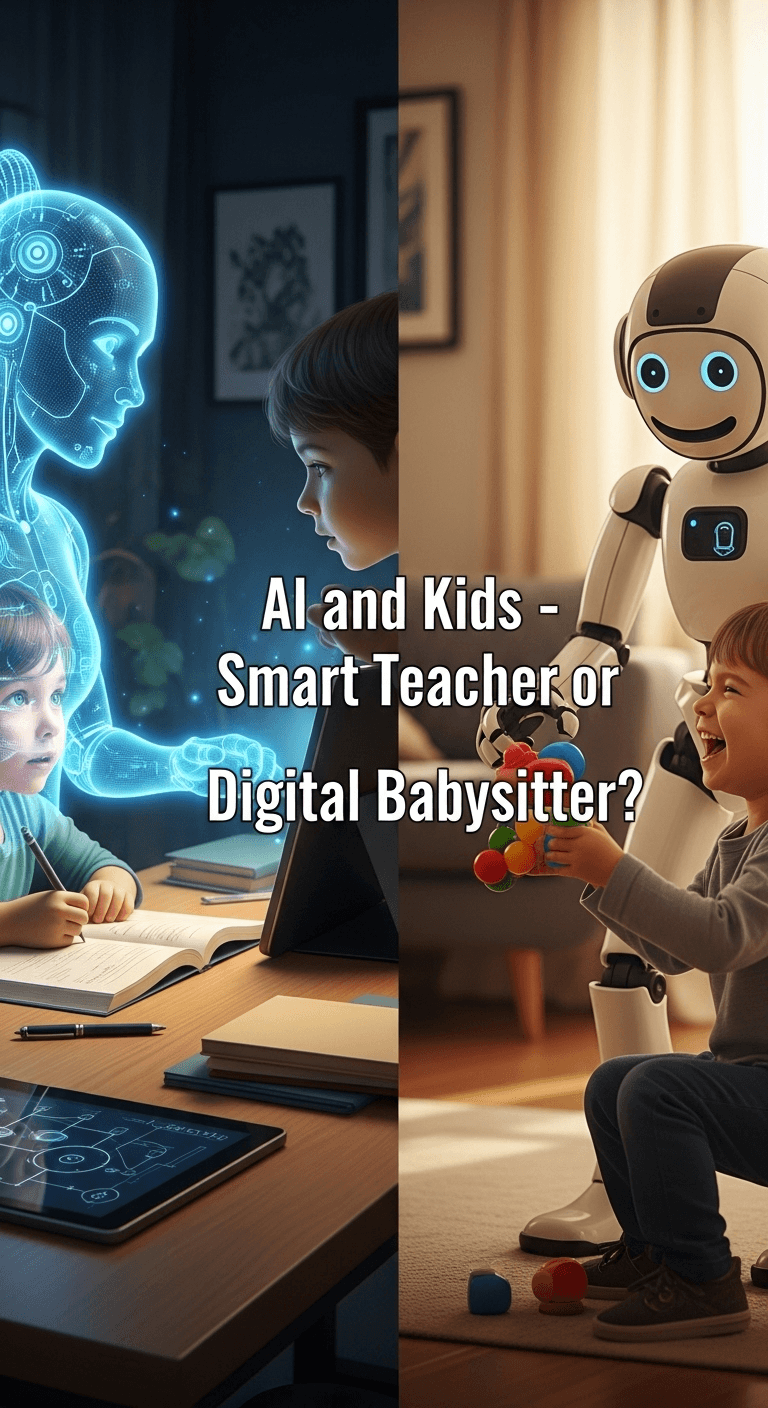
From AI tutors that explain math in minutes to chatbots that read bedtime stories, artificial intelligence is creeping into childhood. Parents call it a lifesaver, critics call it a crutch. Is AI raising the next generation to be smarter—or just more dependent on screens?
Introduction
Remember when the big “educational tech” was a clunky CD-ROM game? Now kids have AI tutors, virtual classrooms, and apps that answer homework questions faster than they can Google it. Some parents are thrilled. Others are wondering if their kids are being raised by robots.
AI as the Super Teacher
- Homework help: AI explains math, science, and history on demand.
- Personalized lessons: The system adapts to a kid’s pace—slower when they struggle, faster when they’re bored.
- Language learning: Chatbots talk in multiple languages, improving fluency.
- Accessibility: Kids with disabilities get tailored support.
It’s like every kid suddenly has a private tutor, available 24/7.
Parents Love It (Mostly)
- Less stress helping with schoolwork.
- More free time when AI takes over bedtime stories.
- Peace of mind knowing their child is “learning” while using a device.
For busy families, AI can feel like the world’s best babysitter.
The Worries
- Overdependence: Will kids lose the ability to think if AI just hands them answers?
- Screen addiction: More AI = more time glued to devices.
- Data privacy: Children’s voices, faces, and learning patterns stored in databases.
- Emotional gap: Can a chatbot ever replace a real teacher’s encouragement or care?
Kids might grow smarter in facts but weaker in real-world social skills.
Real-Life Examples
- Schools already use AI grading systems that scan essays in seconds.
- Some apps are designed as “AI nannies,” reading bedtime stories with emotion.
- Kids as young as 8 have admitted using AI to write their homework.
The line between “learning tool” and “shortcut machine” is blurry.
The Future of AI in Childhood
- AI classrooms: Teachers supported (or replaced) by AI assistants.
- Hybrid parenting: Parents leaning on AI for discipline and entertainment.
- AI mentors: Guiding kids through career advice earlier than ever.
Whether that’s empowering or scary depends on how much trust we give the machines.
Bottom Line
AI can be the smartest teacher in the room—or just another digital babysitter keeping kids quiet. The real challenge? Finding the balance before we raise a generation that knows everything but feels nothing.