AI is no longer hiding in labs or sci-fi movies — it’s in your phone, your car, your shopping cart, even your fridge that judges your midnight snacks.
But as AI spreads into every corner of daily life, the big question shifts from what it can do to what it should do.
And that’s where the ethics get tricky.
Imagine this:
You’re driving your smart car, and it suddenly faces a split-second decision — protect you, or avoid a pedestrian.
Or your favorite app starts recommending products so precisely it feels like it’s reading your mind — or worse, shaping it.
These aren’t futuristic dilemmas anymore. They’re happening now.
So, what’s coming next?
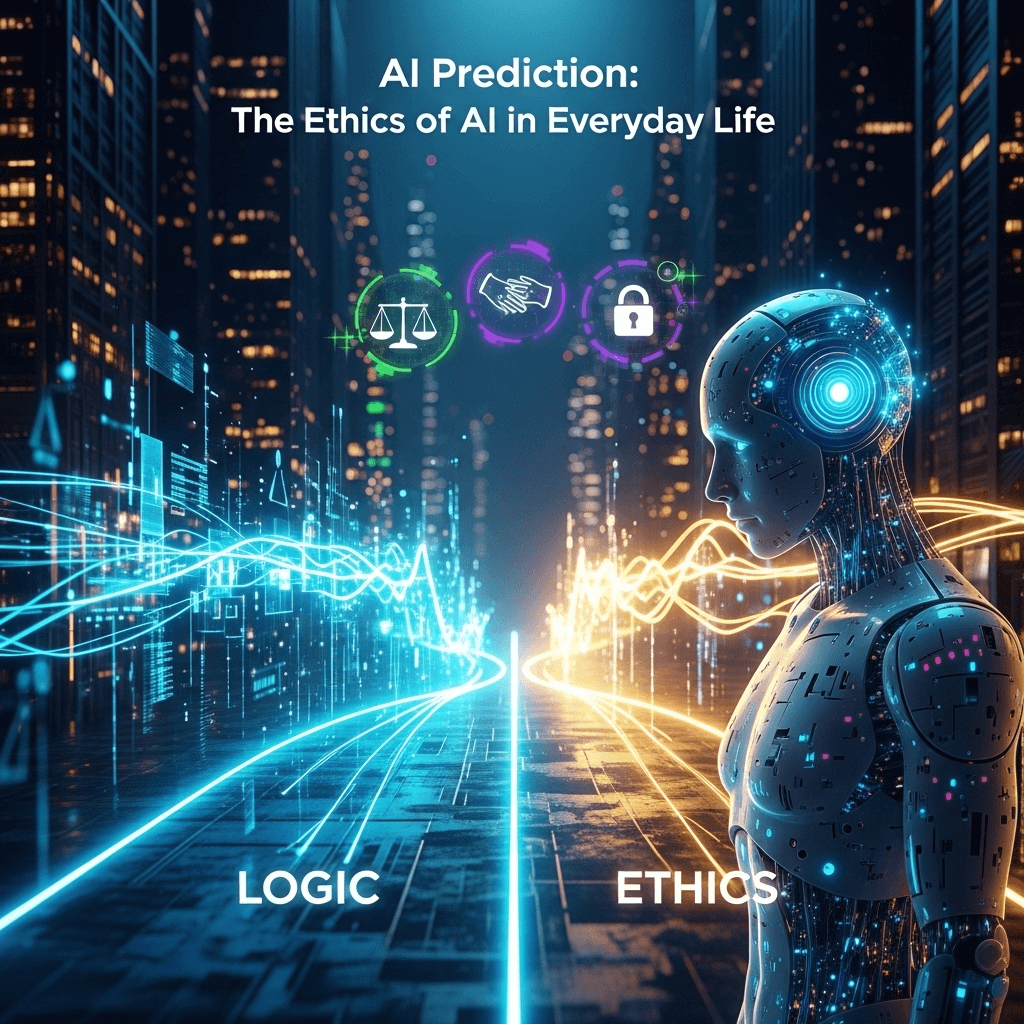
AI ethics will likely become the new digital gold rush — not about who builds the smartest algorithm, but who builds the most responsible one.
We’ll see new jobs like “AI Morality Designer” and “Ethical Algorithm Auditor.”
Companies will brag not just about speed or accuracy, but about fairness and transparency.
Governments will struggle to catch up, of course — regulations move slower than tech. But the public voice is getting louder.
People care. They want AI to help, not manipulate.
Here’s the prediction:
In the next five years, “ethical AI” will become a mainstream standard — as basic as data privacy or cybersecurity.
Products that don’t prioritize ethics will feel untrustworthy, even creepy.
And maybe that’s a good thing.
Because in the end, AI doesn’t have a conscience — but we do.
And the future depends on how much of that we decide to code into it.