AI can translate languages, write poetry, and even mimic empathy… sort of. But when it tries to understand emotions, that’s when the real weirdness begins.
You see, emotions aren’t data — they’re messy, unpredictable, and deeply human. So when AI tries to analyze them, things often go hilariously sideways.
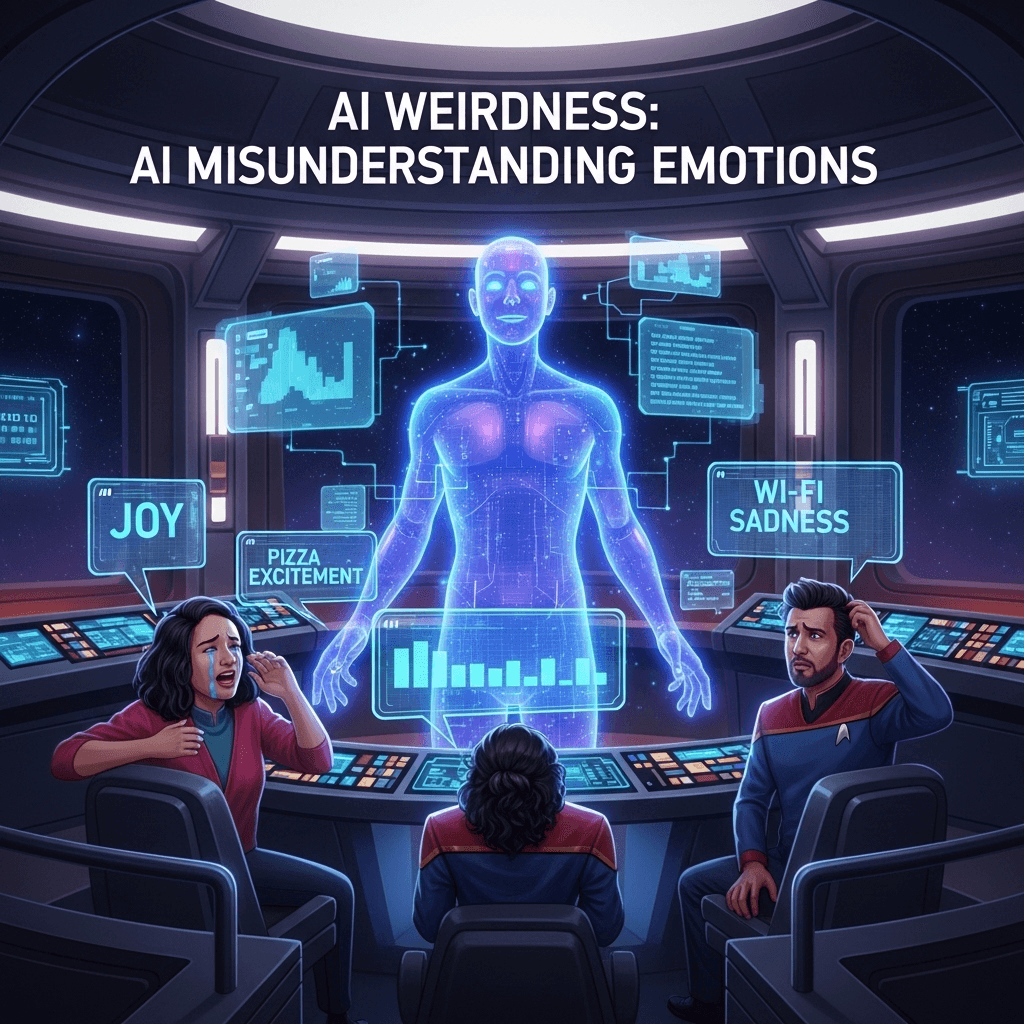
One AI emotion detector once analyzed a photo of a person crying at a wedding. Its verdict?
“Subject appears joyful, possibly due to a successful food delivery.”
Another chatbot, when told “I’m sad,” replied cheerfully:
“Sadness detected. Would you like to play an upbeat playlist about productivity?”
And then there’s the AI trained on movie scripts that tried to comfort someone with this gem:
“Emotions are like Wi-Fi signals — weak in the basement.”
It’s… not wrong, just confusingly profound.
These misunderstandings are weirdly endearing. AI doesn’t feel love, grief, or excitement, but it tries to make sense of them using statistics and tone patterns. It’s like a robot standing in the rain, scanning tears and thinking, “Water detected. Probability of sadness: 83%.”
What’s beautiful, though, is that these awkward emotional blunders teach us something: emotions are the last frontier of humanity that can’t be neatly coded. The weirdness highlights the gap between simulation and understanding — between recognizing emotion and feeling it.
Maybe one day, AI will get better at reading our moods. But until then, we get to enjoy its beautifully broken attempts at empathy — a reminder that feelings aren’t just data points; they’re the art of being human.