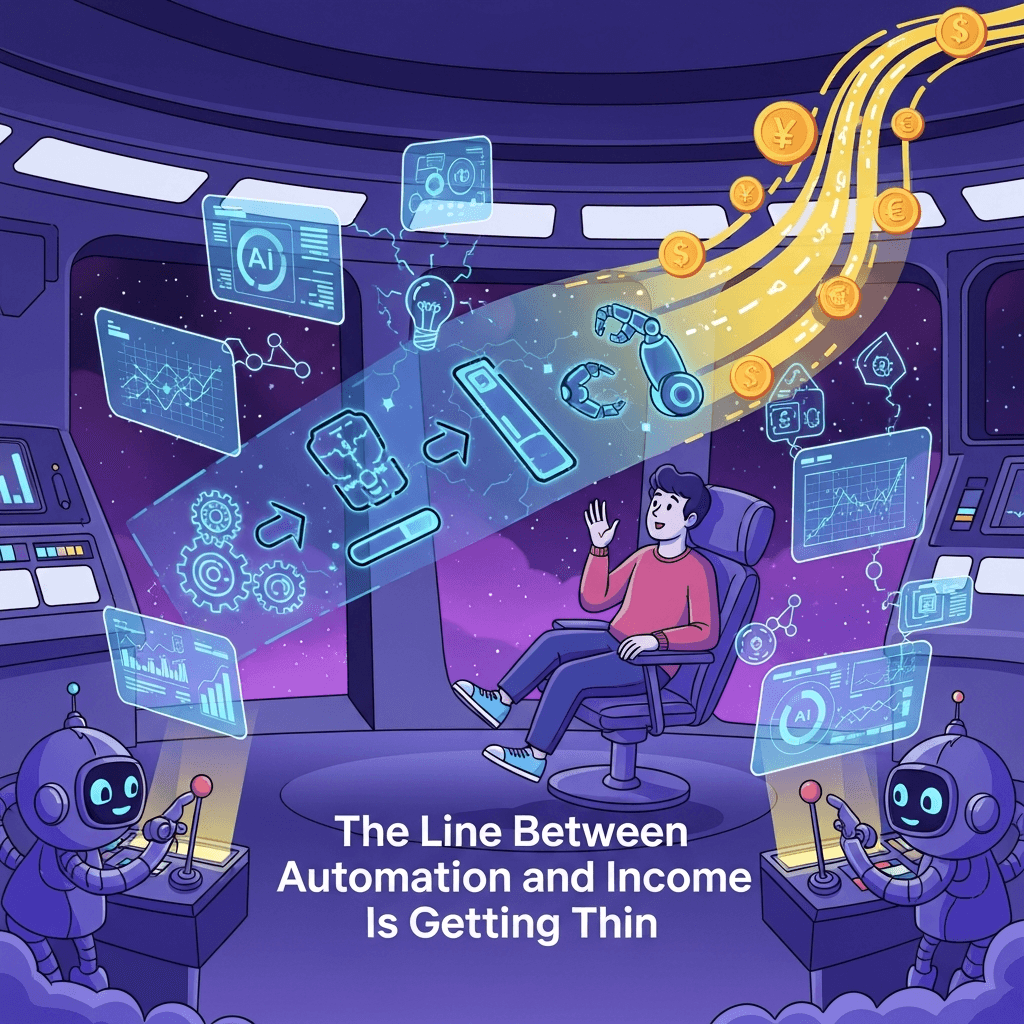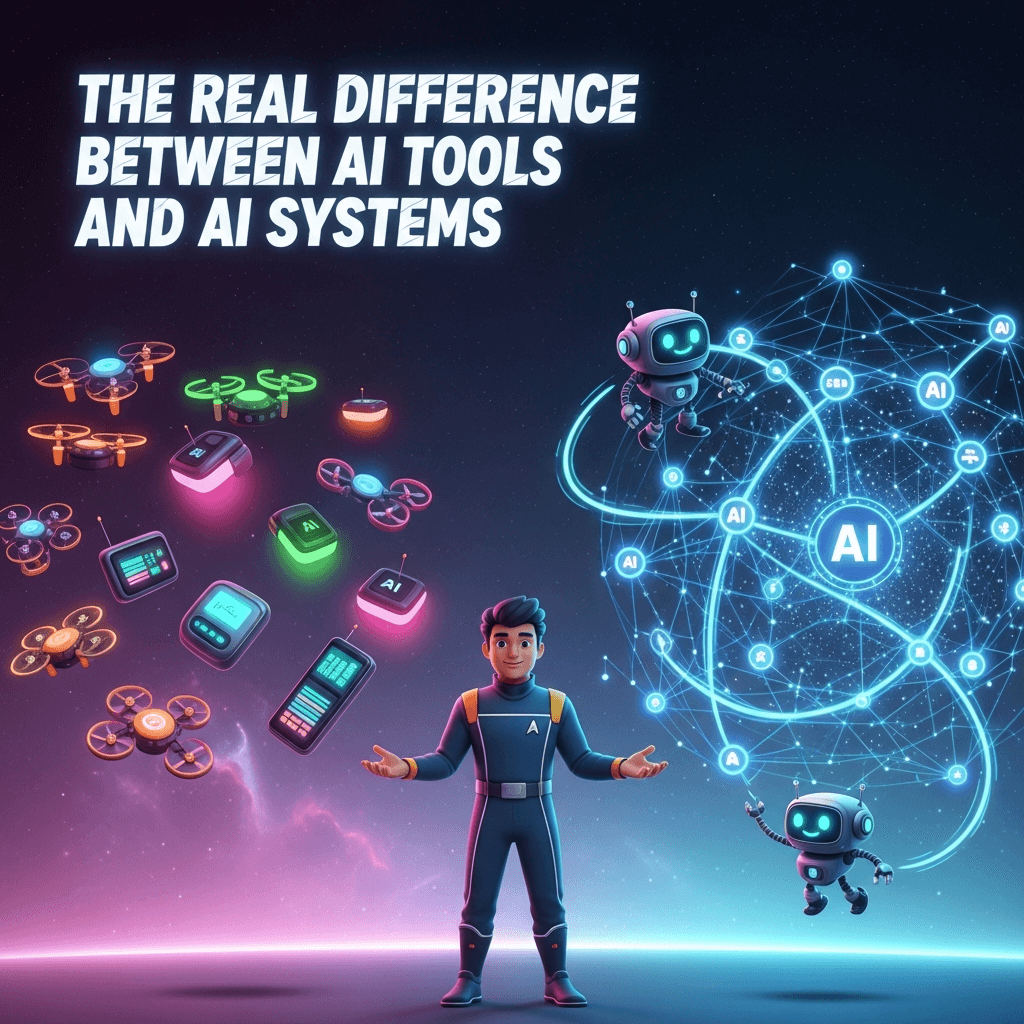
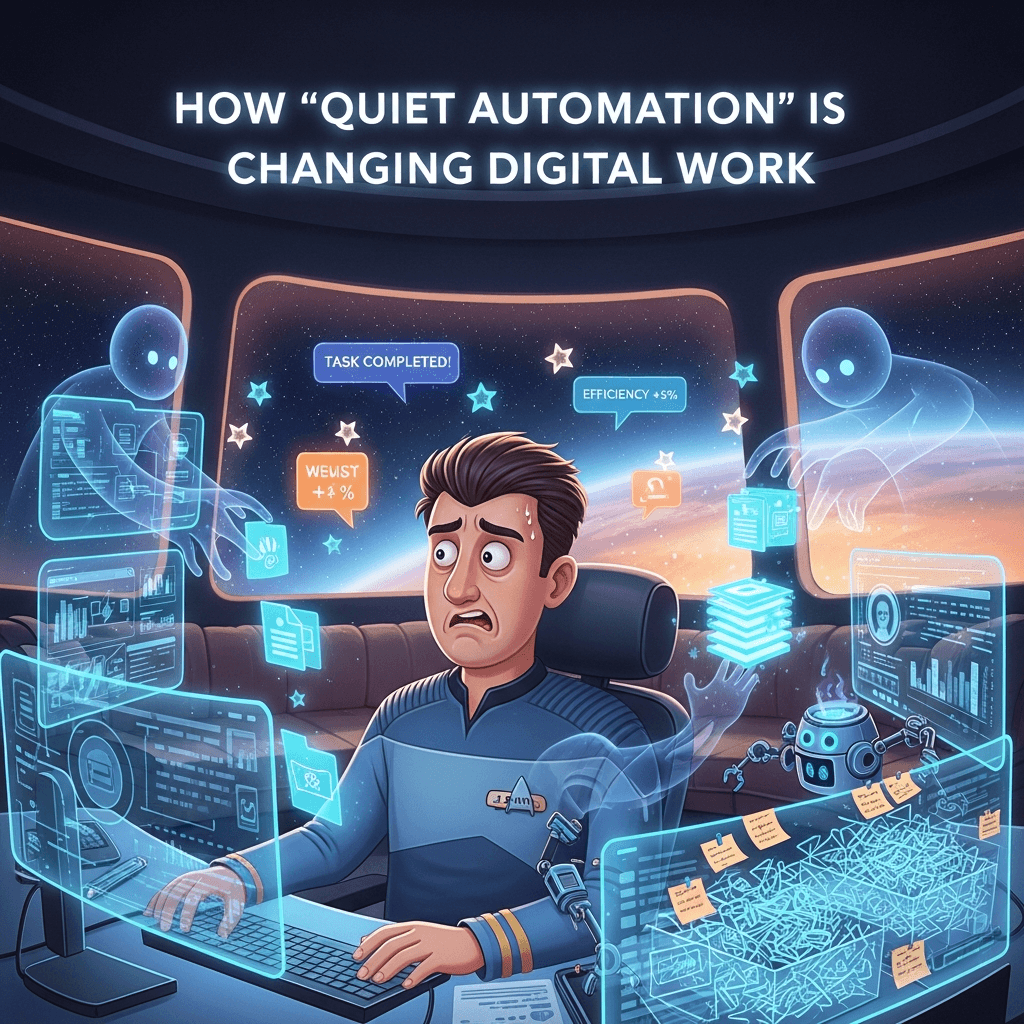
Quiet automation is sneaking into digital work the way background music sneaks into a café—you don’t notice it until you suddenly realize everything feels easier. Subtle AI tools, micro-automations, and invisible workflows are reshaping how we work online. This article explores how quiet automation is transforming digital productivity without the drama of robots taking over your office chair.
Here’s the funny thing about the future: we always imagine it arriving with a dramatic entrance. Alarms blaring. Red lights flashing. A robot kicking down your door like, “HUMAN, I WILL NOW OPTIMIZE YOUR WORKFLOW.”
But in reality? The future tiptoes in wearing fuzzy socks.
Welcome to quiet automation—the silent, slightly smug cousin of the big, loud “AI Revolution” headlines. It doesn’t ask for permission. It doesn’t demand a press conference. It simply slides into your daily tasks, cleans up your digital mess, and leaves before you even realize something magical happened.
For example:
You spend 10 minutes rewriting an email. Suddenly your email client suggests a cleaner version—with a tone so perfect you suspect it has secretly been reading your diary. Quiet automation.
Or this one:
You open a spreadsheet you abandoned three months ago. It now magically has color-coded warnings, predicted totals, and even a polite suggestion like: “Hi! You seem to be confused. I fixed your formulas.” Quiet automation.
And my personal favorite:
You try to schedule a meeting across three time zones. Before your brain can start smoking, your calendar whispers, “Relax, captain. I already found the optimal slot.” At this point, you half-expect it to salute you like a Starfleet officer. Quiet automation again.
While the rest of the world debates whether AI will destroy civilization or simply ruin job interviews, quiet automation has taken a different route. It has infiltrated the small, repetitive, annoying corners of digital work. The parts nobody wants awards for doing. The parts we forget take hours. It’s less “robot overlord,” more “helpful ghost roommate who organizes your stuff at 3 a.m.”
What makes quiet automation interesting isn’t that it replaces humans—it supports us. It does the tiny tasks that drain us. The clicks. The formatting. The copy-pasting. The “did I already write this sentence?” panic spirals. It frees our brain so real creativity can show up in its glittery cape like a dramatic Jedi making a grand entrance.
Think of quiet automation as the universe’s soft patch update for humanity:
Less stress.
More momentum.
Fewer spreadsheets attacking your sanity.
Will it get weirder? Absolutely. Soon your project management board might start offering you emotional support. Your design tool may try to guess your mood. Your AI assistant might say, “Hey, sorry to bother you, but I noticed you forgot lunch again.”
And honestly? I’m not mad. That’s the kind of sci-fi future I signed up for.
Quiet automation isn’t loud. It’s not heroic. But it is—slowly, silently—changing the way digital work feels. And in an age of constant noise, maybe the biggest revolution is the quietest one.