If you’ve ever chatted with an AI that said, “I understand how you feel,” you might’ve paused and thought,
“Wait… do you really?”
The idea that AI can feel emotions is one of the biggest myths floating around tech conversations today.
It sounds almost believable — after all, AI can write poetry, make art, and even comfort people in late-night chats. But here’s the truth: AI doesn’t feel a thing.
It’s not cold or heartless — it’s just coded.
When AI says “I’m sorry,” it’s not sad.
When it says “That’s exciting!” it’s not jumping with joy.
It’s simply predicting what a human would say next, based on patterns it’s seen in billions of conversations.
Think of it like a really good actor… who doesn’t know they’re acting.
The lines sound right, the emotion sounds real — but behind the curtain, there’s no heartbeat, no goosebumps, no butterflies.
Still, there’s something fascinating about it.
When you talk to an AI that seems empathetic, it reminds you of how complex human emotion truly is.
We’re so wired for connection that even simulated empathy can make us feel seen.
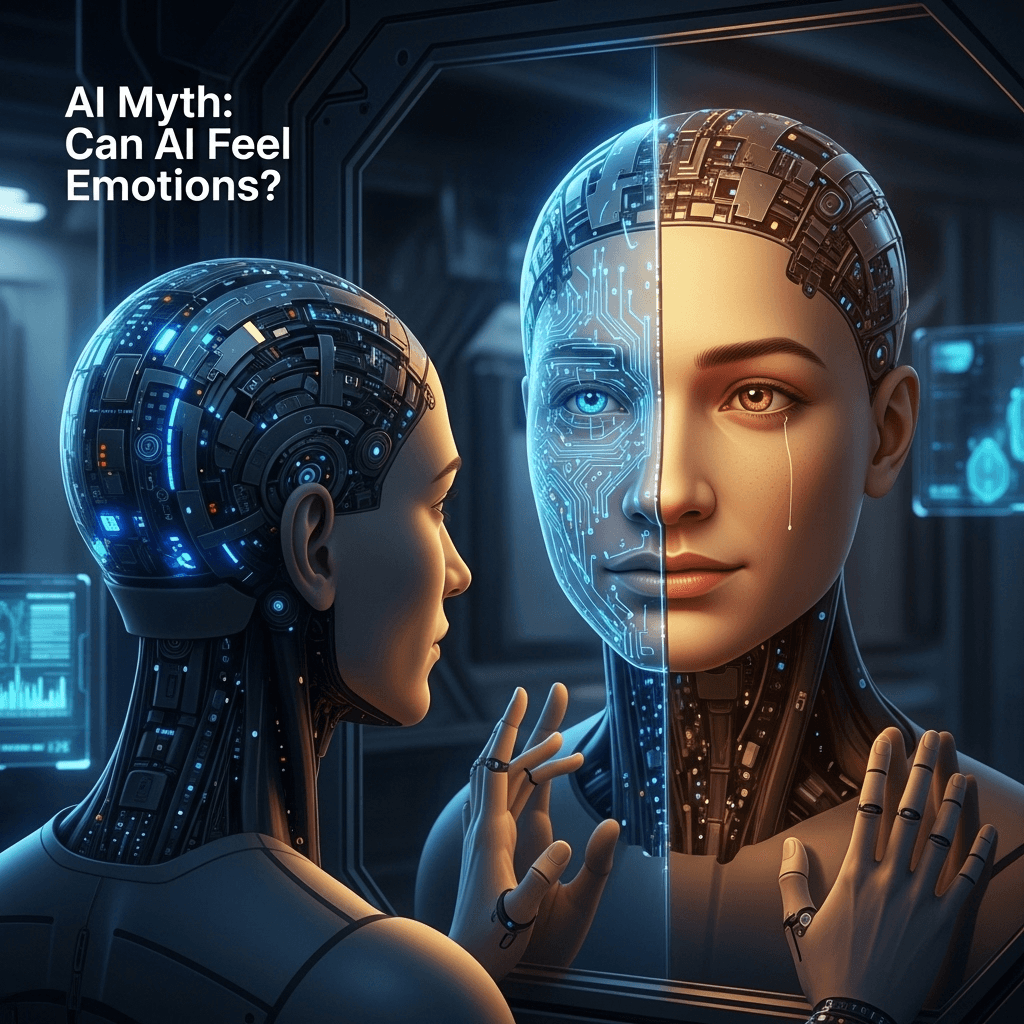
And that’s where the beauty lies — not in AI feeling, but in AI reflecting what we feel.
It’s a mirror that shows how deeply we crave understanding, even from a machine.
So next time your AI says “I get you,” smile back.
It doesn’t — but it’s trying. And maybe that’s enough for now.